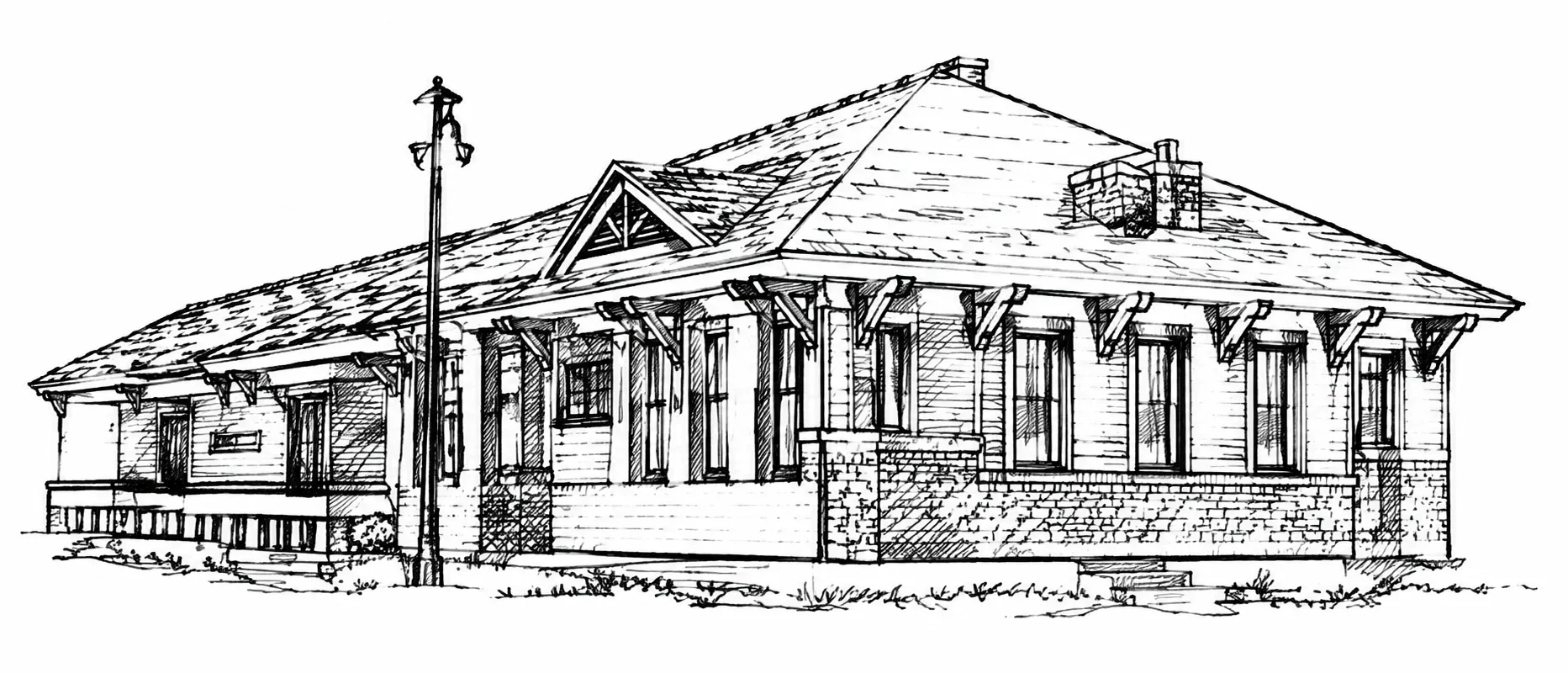
Historical Overview
Early Settlers
“The Origins of Tarpon Springs Foundations by the Gulf”

The City of Tarpon Springs is centrally located on Florida’s west coast on the Gulf of Mexico. The first private landholder in the area was Samuel E. Hope, who purchased land on the north side of the Anclote River in 1864. After the Civil War, two brothers from Ocala, Frederic and Benjamin Meyers, bought land from Hope and built their homesteads on the river. In 1876, A. W. Ormond and his daughter Mary moved from the Carolinas and became the first settlers within the current city limits of Tarpon Springs. The city’s name is attributed to Mary Ormond, who observed an abundance of Tarpon fish rolling in Spring Bayou. This event inspired the name Tarpon Springs.
Disston Purchase
“Catalyzing the Growth of Tarpon Springs”
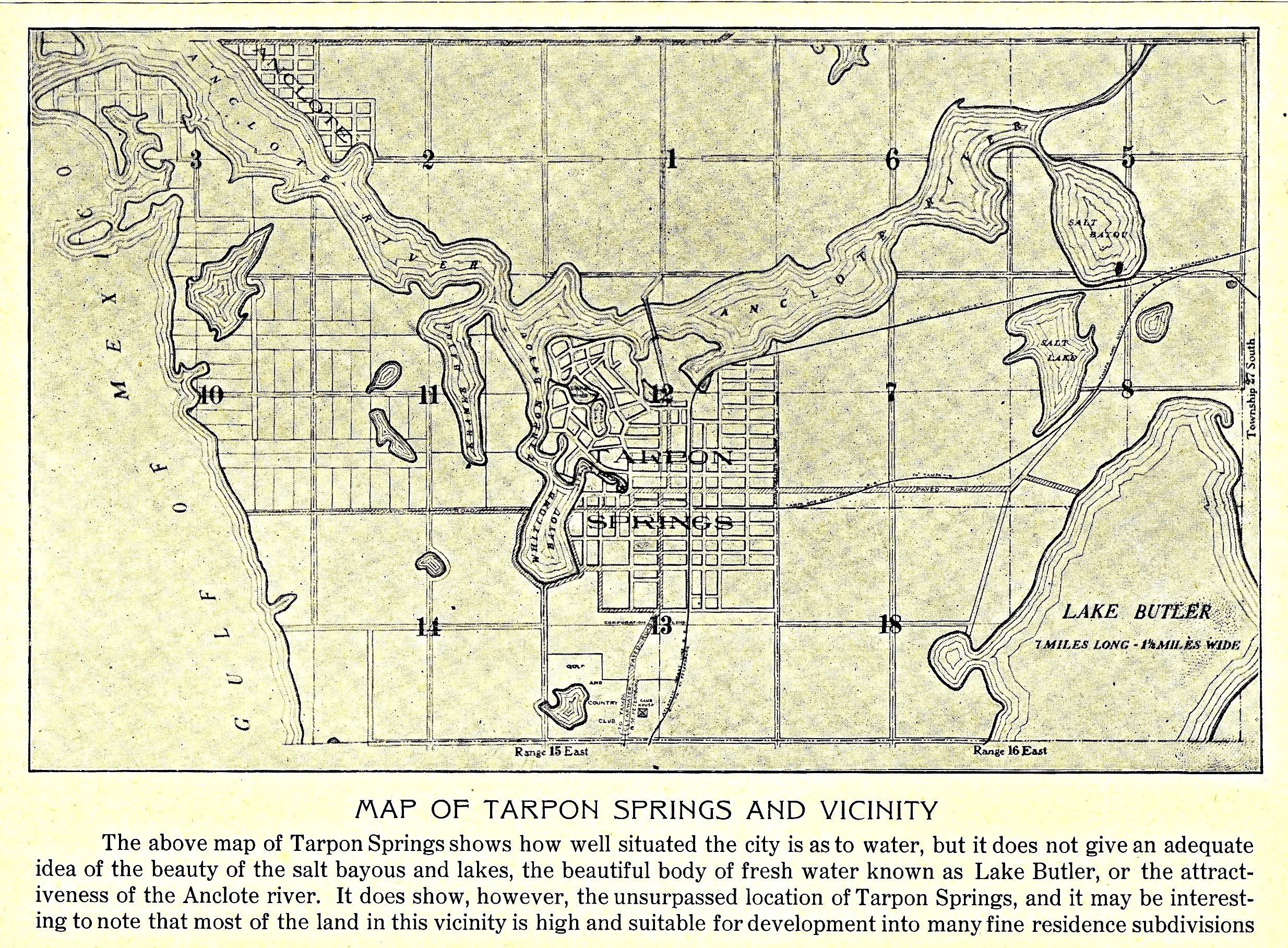
The event that accelerated the growth of Tarpon Springs, and much of southern Florida, was the Disston land purchase of 1881. Hamilton Disston, a wealthy saw manufacturer from Philadelphia, cleverly bought four million acres of Florida land at twenty-five cents per acre from the Florida Internal Improvement Trust Fund. This fund, created in 1855, was meant to manage state lands available for sale. After the Civil War, the fund became mired in debt, and by law, land could not be sold from the Fund until the debt was paid. Approximately 20,000 acres of the purchase was located in what is now Pinellas, Pasco, and Hillsborough counties. In 1882, Disston’s surveyor, Major Mathew Robinson Marks, conducted the first survey and laid out the town of Tarpon Springs. Disston and his partners established the Lake Butler Villa Company to sell land, selecting Tarpon Springs as their primary location. Gradually, the town grew.
In 1884, a post office was founded with a Jewish man of Russian descent, Ed Blum, serving as postmaster. Within a few years, the town attracted about 300 residents. On February 12, 1887, Tarpon Springs became the first incorporated city on the Pinellas peninsula of then Hillsborough County.
Anson P. K. Safford
“The City is Born”
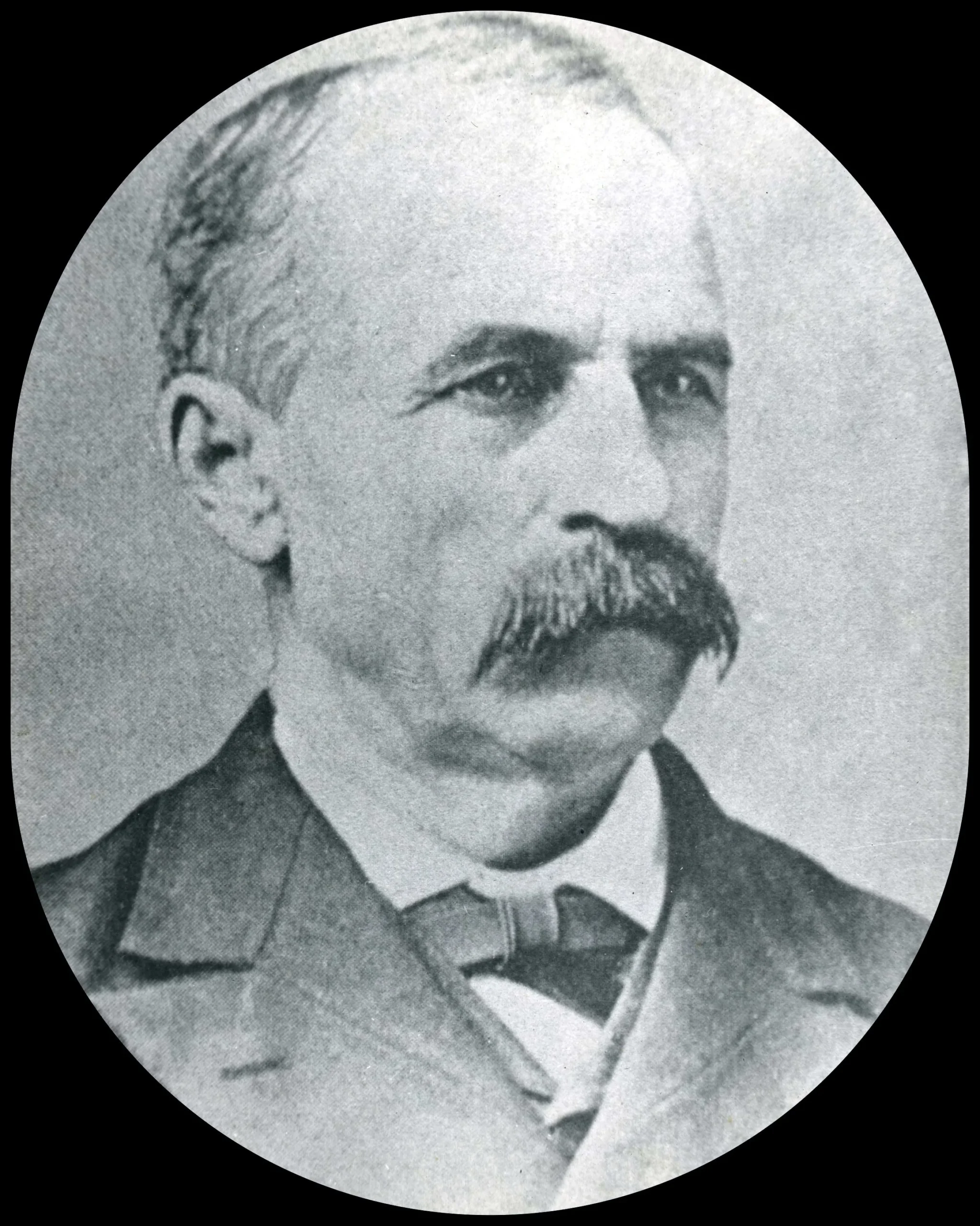
Hamilton Disston chose Anson P.K. Safford, a business acquaintance of long standing, to head
his activities here. Safford was born in Vermont and grew up in Illinois. At age 20, he moved
west with the Gold Rush and was elected to the California Assembly six years later. He was
appointed surveyor general of Nevada and, in 1869, was appointed territorial governor of
Arizona. One of his major accomplishments was establishing the Arizona public school system.
His involvement in Arizona mining ventures made him a wealthy man. He subsequently moved to Philadelphia, where he renewed his acquaintance with Disston, who chose him to head
Disston’s Lake Butler (Tarpon) Villa Company located in Tarpon Springs.
Safford became one of Tarpon Springs’ leading citizens, and his influence was felt in a variety of
ways. He built the first small school and gave land for several churches. He also brought his
sister, Dr. Mary Jane Safford, to Tarpon Springs, where she opened a medical practice, thus
becoming one of the first female physicians in Florida.
It was under the organization of Safford that the trifecta of the area was made. Safford was one of the founding members who worked to incorporate Tarpon Springs as a city in 1887, thus proving that 1887 was the jackpot of years; Tarpon Springs became a city, welcomed a railroad, and constructed a lighthouse.
The Railroad and The Anclote Lighthouse
“1887: The City Comes of Age”
In 1887, Tarpon Springs underwent significant growth with the arrival of the Orange Belt Railway. Granville Noblit, a surveyor for the railway, mapped out a route from Tarpon Springs to St. Petersburg in 1884. The city leaders provided land for the depot, while Hamilton Disston, who had purchased four million acres of Florida land for a mere twenty-five cents an acre, donated a portion of the building site and the right-of-way, which helped facilitate construction. Before this time, reaching Tarpon Springs required a long journey on the Pennsylvania Railroad to Cedar Key, a steamer to Anclote, and a horse and buggy ride. The Orange Belt Railway streamlined access, linking the town more directly to other parts of Florida and fostering economic development.
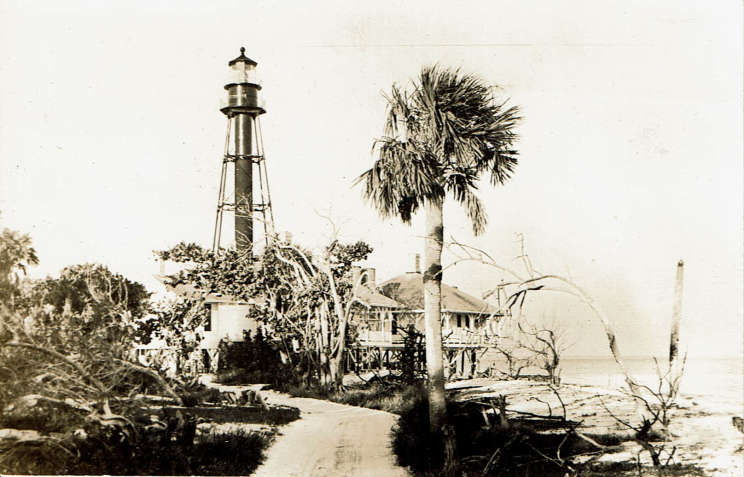
That same year marked a significant milestone with the completion of the Anclote Key Lighthouse, a beacon that greatly enhanced maritime navigation along the Gulf Coast. This critical development was instrumental in improving transportation routes, ensuring safer passage for vessels navigating the waters. These advancements collectively laid a strong foundation for Tarpon Springs to develop into a vital hub, fostering economic growth and connectivity with surrounding areas.
The Black Presence
“Black Community in Tarpon Springs”
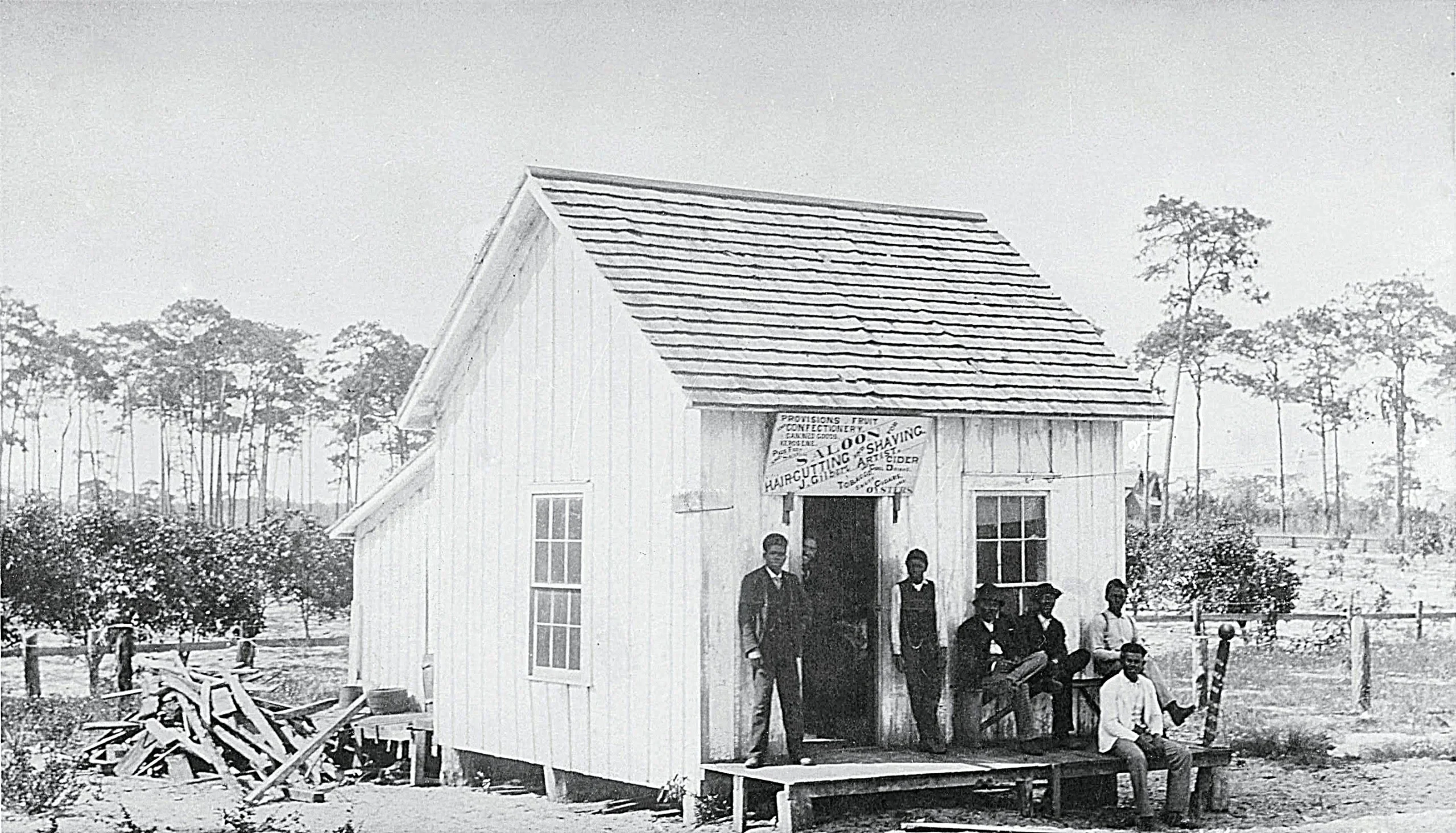
The first African Americans settled in Tarpon Springs in the early 1880s. They came
primarily to work at the lumber mills and the citrus industry. Most lived in cabins
built for them near the lumber mill called “Patten’s Quarters.” Some also established
businesses.
Others arrived in the 1890s from the Bahamas and Key West to work as spongers.
Some owned their own boats, while others became divers and crew members on
Greek vessels and spoke fluent Greek. African American women were in demand as
household staff, and several were skilled midwives.
Young Black men from Tarpon Springs served in every U.S. war. Among other notable African Americans were a train engineer, educators, ministers,
photographers, police officers, city commissioners, and in 2010, David O. Archie
became the first Black mayor of Tarpon Springs.
The Sponge Industry
“John King Cheyney: Founder of Tarpon Springs’ Sponge Industry”
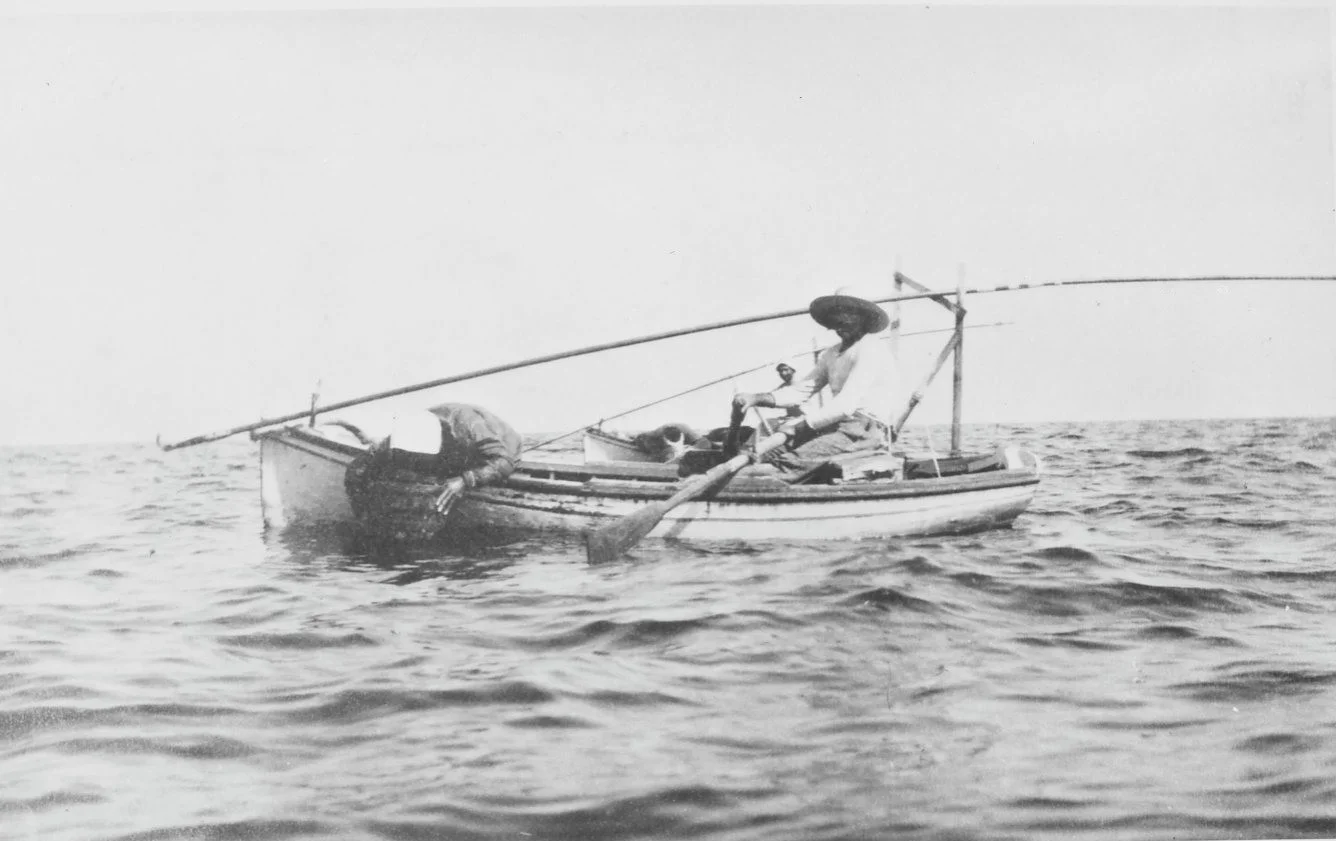
John King Cheyney, son of a wealthy Philadelphia Quaker and associate of Disston, became the
leading officer of the Lake Butler Villa Company after the death of Anson P. K. Safford. Cheyney
established the sponging industry in Tarpon Springs during its early years, where the sponges
were harvested from a small two-man dinghy using a long pole to hook the sponge and a glass-
bottomed bucket to see underwater. Sponges were cleaned, bought, and sold at Bailey’s Bluff
north of the Anclote River. Cheyney was one of the major buyers, along with Ernest Meres,
whose family was a founding settler of the town.
There had been a sponge industry in the Bahamas and Key West since the 1840s. It was,
however, the Greek immigrants who expanded and refined sponging in Tarpon Springs. A
rubberized diving suit and hard-hat, with a pumped-in air supply, called a scaphandro in Greek,
evolved and was in use in the Mediterranean sponging industry. Cheyney, the businessman,
soon met a young sponge buyer who would change the harvesting of sponges in the western
world.
The Greek Presence
“Growth of the Sponge Industry and Community in Tarpon Springs”
Ever the entrepreneur, Cheyney formed the Anclote and Rock Island Sponge Company with
Disston’s backing in 1891. A young enterprising sponge buyer, who had been recruited by
Cheyney, saw how mechanization could increase their yield by a possible 300 percent. His name
was John Cocoris, and the two joined together and changed the industry. A rubberized diving
suit with a pumped-air breathing tube, hard-hat or helmet, and weights had been developed
and was in use in the deeper waters of the Mediterranean in the sponging trade.
In 1905, Cocoris enlisted some 500 hard-helmet sponge divers from Greece, and established
this new, more efficient method of gathering sponges, relocating the prosperous sponging
industry to the Gulf of Mexico. Tarpon Springs was established as the largest sponge port in the
United States, and adopted the moniker of the sponge capital of the world.
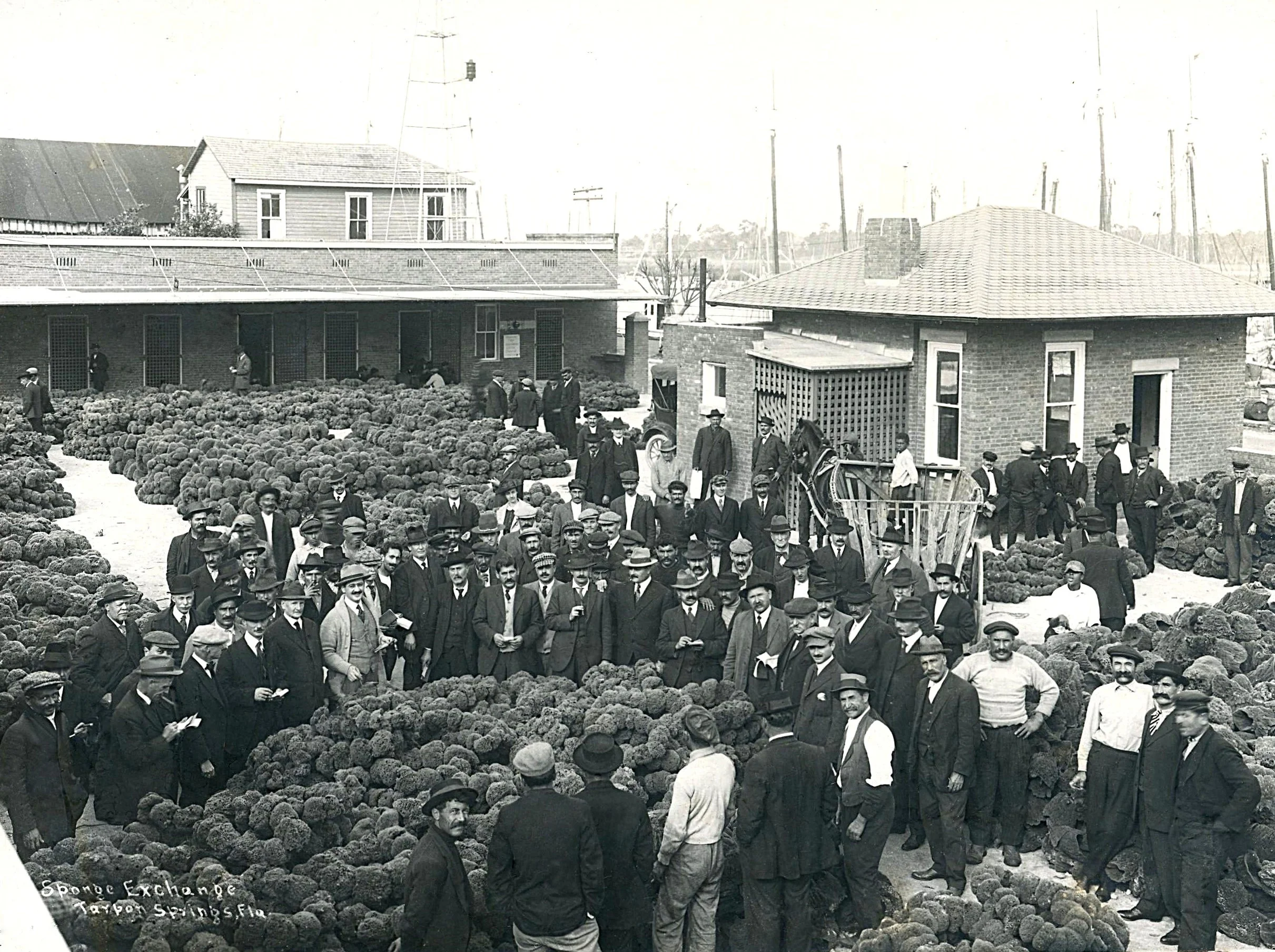
Other businesses were established to serve this Greek community, such as restaurants, coffee houses, and grocery stores. Following the influx of Greek divers, their families, and the accompanying commerce, sponge merchants and brokers came to Tarpon Springs. Their presence helped to create a well-integrated industry. They built boats, loaned money to boat owners, and supplied tools and equipment to the entire sponge fleet. In 1907, the Sponge Exchange was founded as a non-profit organization by 50 local buyers that provided safe storage for the sponges and a large open area for silent auctions. Some of the buildings have survived many changes over the years, and today the Sponge Exchange is a shopping area of smaller stores. Visitors can see a row of the original type of cells that the spongers used to secure their harvest.
Turn of the Century
“The Best and Worst of Times – The late 1800s”
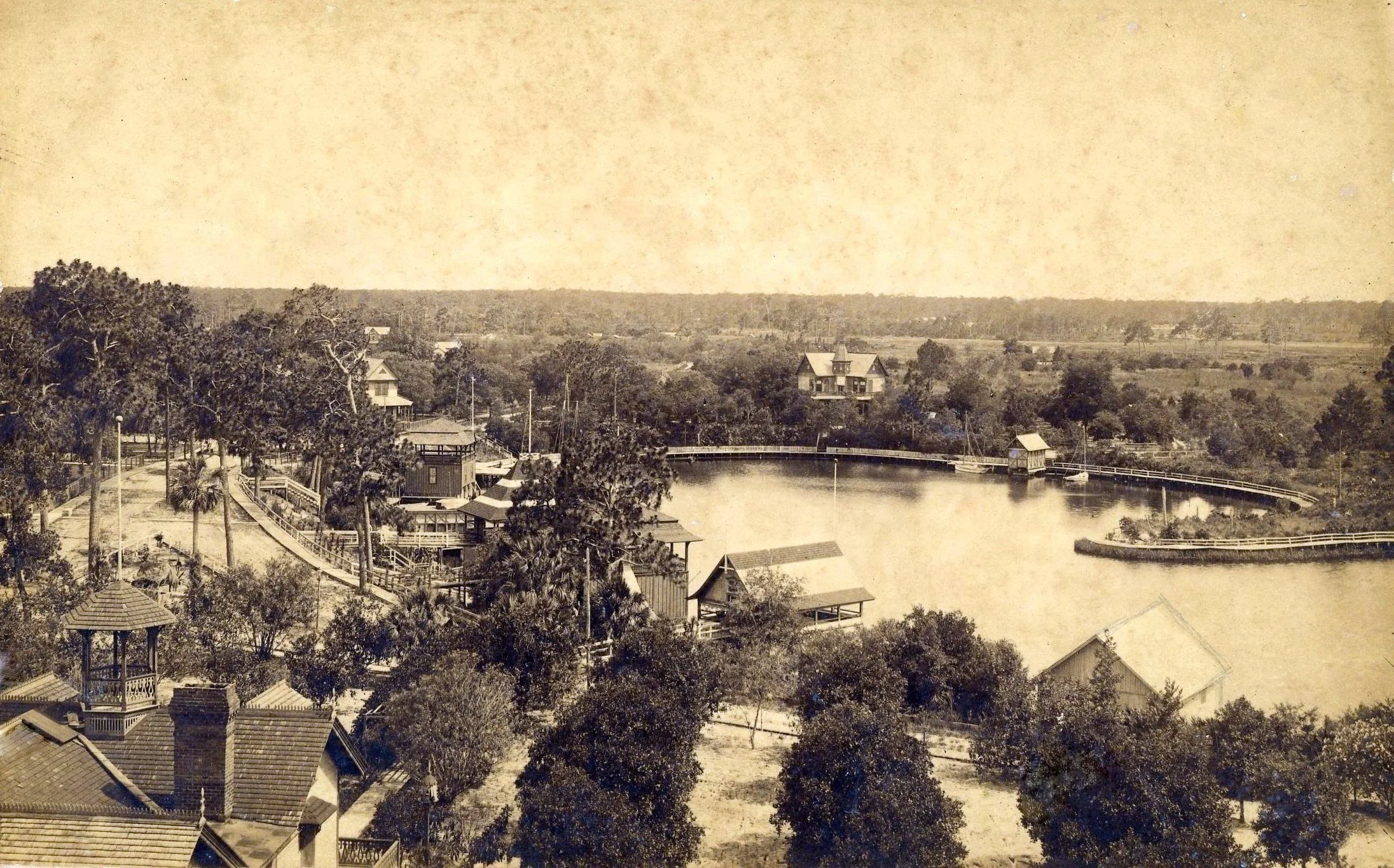
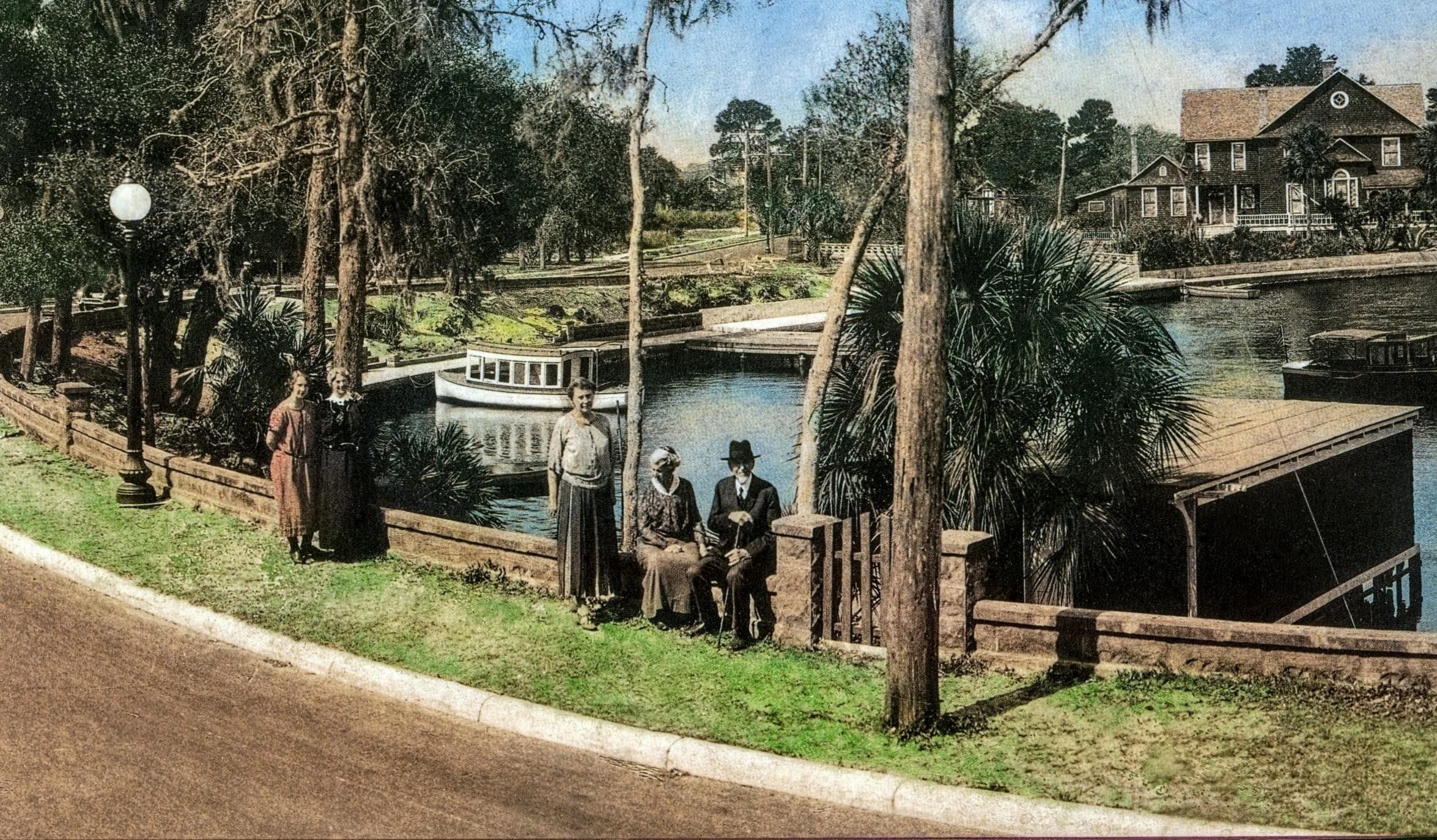
Tarpon Springs experienced the same advantages that much of Florida gained in the late 19th century, when the state became a popular winter destination for wealthy Americans from across the country. Renowned artists, George Inness, and later his son George Inness, Jr., were winter residents. Some of the grand homes that still stand in the city today were built near Spring Bayou during this time.
Prior to the train’s arrival, wealthy winter residents and tourists ventured to Tarpon Springs by boat and steamships. They stayed in their personal winter residences, boarding houses, and hotels. Amelia Petzold Meres, also known as “Mother Meres,” and her husband, Walter, came to Tarpon Springs and operated The Tropical. It later was named The Ferns.
Growth and progress did not come without setbacks. In December 1891, the city lost two of its leading citizens when Anson Safford, and his sister, Dr. Mary Jane Safford, died within a week of each other. During the winter of 1894-1895, two periods of record low temperatures severely damaged the citrus crop, a major source of income for the area. Then in 1894, much of the city’s central business district was destroyed by fire, including the wooden train depot in 1908. When merchants rebuilt, they replaced their stores and offices with structures made of brick and stone, featuring tin ceilings and metal or tile roofs that were less flammable than the original wooden ones.
Growth in the 20th Century
"The Developing City — The 1900s”
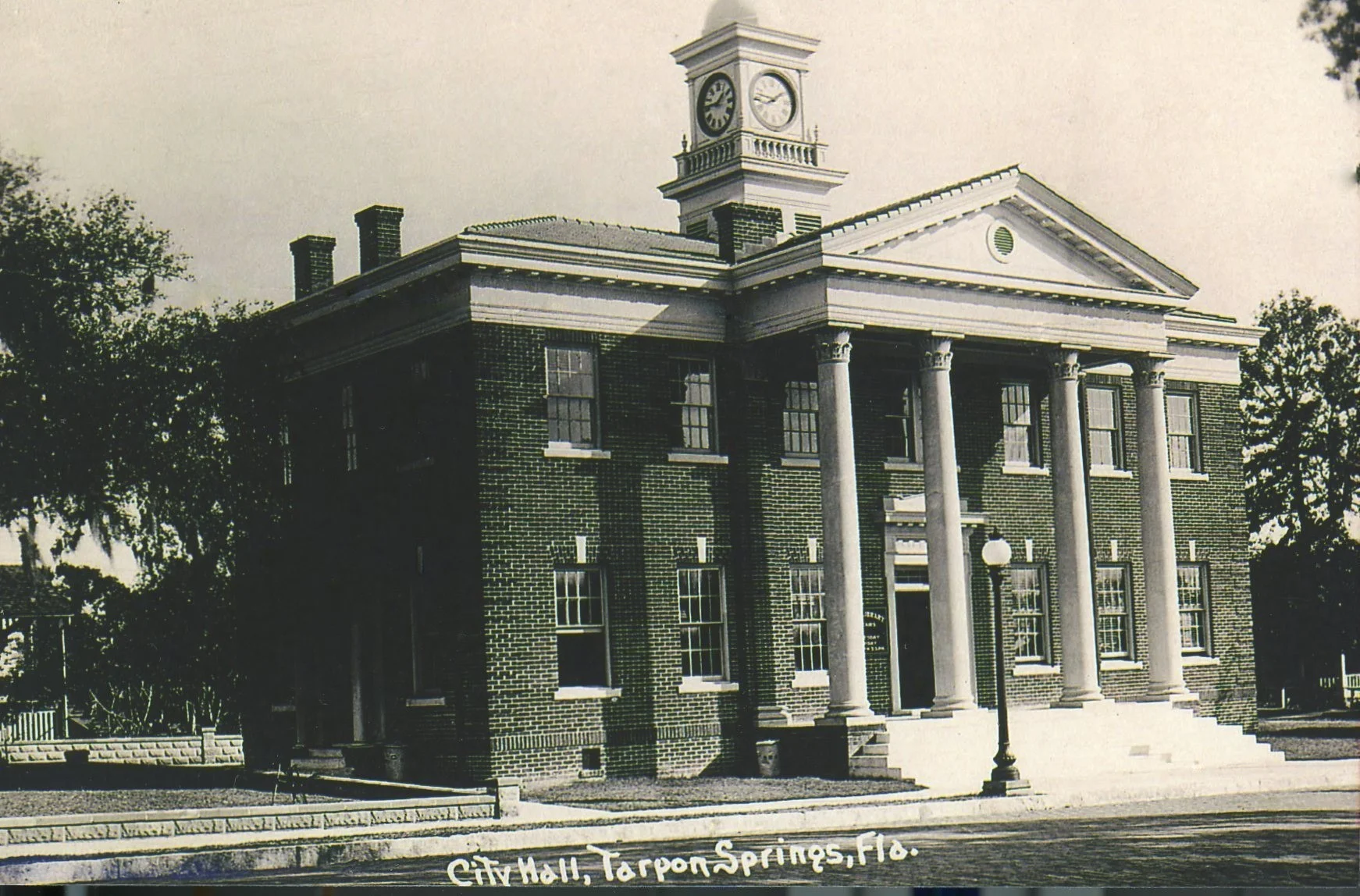
The city acquired a new look in the decade before WWI. A new brick Atlantic Coastline Depot was constructed in 1909. By 1910, Tarpon Springs included an ice plant, an electric plant, two lumber mills, cigar factories, several banks, and a post office. In 1912, a brick school on Eagle Street, now Alternate 19, served grades 1 through 12, and the impressive new City Hall opened its doors in 1915.
Tarpon Springs experienced a real estate boom and tourism increase that defined Florida during the 1920s. Many new subdivisions were planned, tripling the size of the original town, and impressive buildings were constructed, including the Sunset Hills Country Club, the Shaw Arcade Hotel, the Villa Plumosa Hotel, the new high school on Pine Street, a water plant, and the city’s first hospital. In 1943, the grand St. Nicholas Greek Orthodox Church replaced the original wooden church from 1907.
Thousands of visitors came to the city each year to enjoy the outdoors, play golf or fish, explore the Sponge Docks, experience Greek culture, shop for art and antiques, and stroll through charming Victorian neighborhoods.
Tourism
“The Venice of the South”
Prior to the train’s arrival, wealthy winter residents and tourists ventured to Tarpon
Springs by boat and steamships. They stayed in their personal winter residences,
boarding houses, and hotels. Amelia Petzold Meres, also known as “Mother Meres,”
and her husband, Walter, came to Tarpon Springs and operated The Tropical. It later
was named The Ferns.
Thousands of visitors come to the city each year to enjoy the outdoors, play golf or
fish, explore the Sponge Docks, experience Greek culture, shop for art and antiques,
and stroll through charming Victorian neighborhoods.
Historical Society Beginnings
“Moving Forward”
The Tarpon Springs Area Historical Society, Inc., was incorporated as a 501(C)3 non-profit organization in 1967 with Colonel H. M. Salley, married to a descendant of Mother Meres, as its first president. The Historical Society had over 100 members who met at members’ homes until the opportunity came to have space in the Tarpon Springs Train Depot in 1976. In the early 1970s, author Gertrude K. Stoughton, researched and compiled the extraordinary history and heritage of Tarpon Springs that was published posthumously, Tarpon Springs, Florida: The Early Years, in 1975. This publication was reissued with updates in 1992 by Edward C. Hoffman, Sr., President of the Tarpon Springs Area Historical Society for over 25 years. This book remains the standard reference on Tarpon Springs’ most interesting history due to its accuracy and insights.